Flame Lit -Part II – A limited micro-blog series of energy definitions and quick facts to help improve energy literacy
photo by najma m.
Natural Gas
Many of us heat our homes and hot water with natural gas. What is it anyway?
Natural gas is a light hydrocarbon. It’s mostly methane (CH4) but also contains small amounts of heavier gases like ethane and propane.
The gas we use in our homes, like all fossil fuels, was created millions of years ago when carbon sources (old plants and sea life) decayed and formed gas and oil under pressure.
It can also form on the surface anywhere natural materials decay including your local landfill and sewage plant!
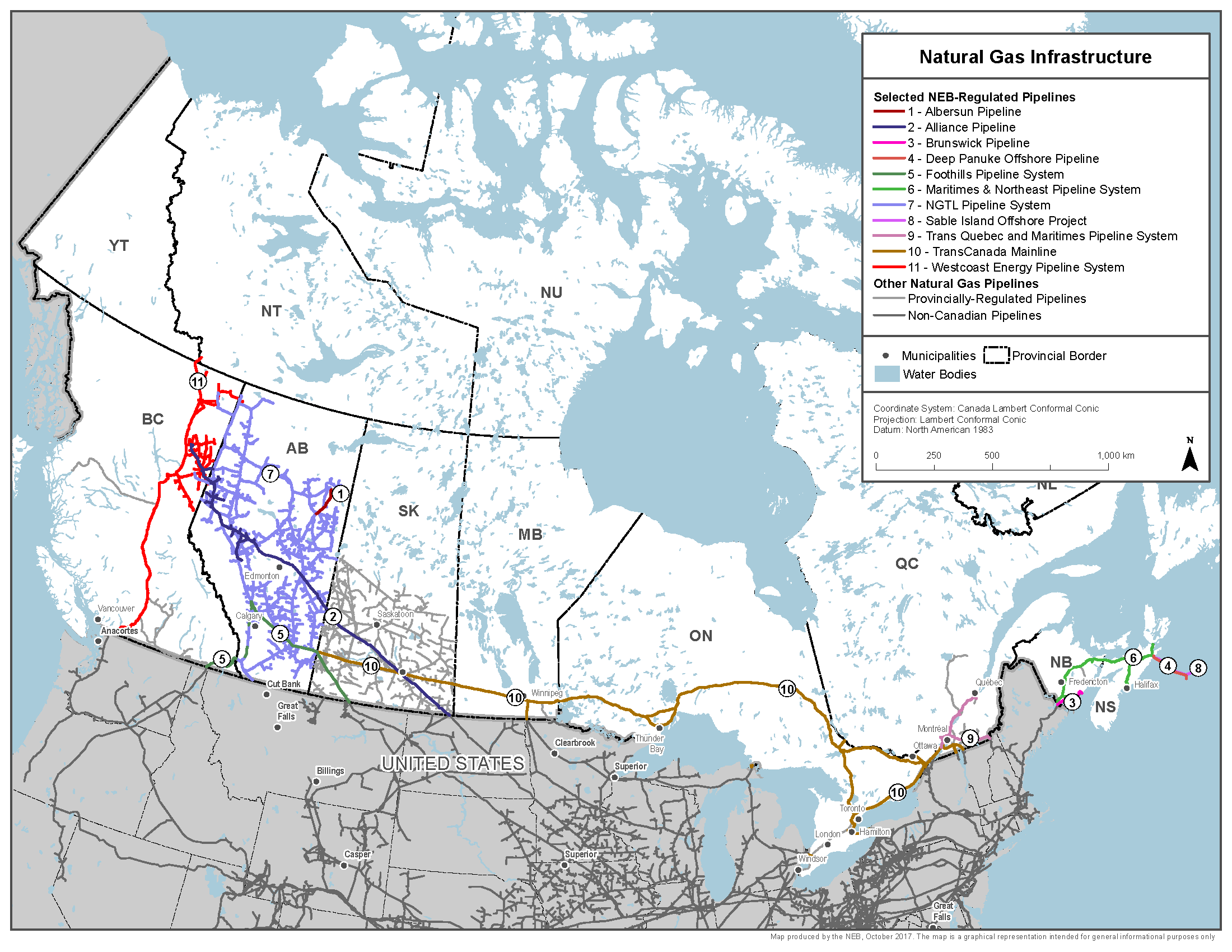
Where does it come from? Most of the natural gas we use in Canada comes from Alberta, British Columbia and Saskatchewan. A small amount comes from other regions or is imported from the U.S. for supply balancing.
Natural gas is produced by drilling wells into the formations that contain it and then processing the gas to remove any impurities. It is then compressed into large diameter pipelines called “transmission lines” and transported over long distances.
The gas is delivered to cities, towns, and your home through smaller diameter pipelines at lower pressure.
Conventionally, natural gas is produced as a gas, processed, and then shipped to end users in pipelines that are often inter-connected between countries. The North American natural gas pipeline grid is extensive. There is a great map here!
What about LNG?
Liquified natural gas (“LNG”) is natural gas that has been chilled to about -160 C so that it can be shipped in liquid form on tankers. Canada is poised to get its first major export LNG facility in Kitimat, B.C., in mid 2025. The facility is designed to ship 1.8 Bcf/d. There are 7 proposed LNG projects in Canada at present. Canada has some existing LNG plants, designed mainly for importing gas, in New Brunswick and Hamilton.
Some quick facts on natural gas produced and used in Canada:
- Canada produced 17.9 Bcf/d (billion cubic feet per day) on average in 2023. 7.9 Bcf/d (44%) of that was exported via pipeline to the U.S. Small amounts were imported for regional balancing.
- Canada’s exports of natural gas to the U.S. have declined in recent years but domestic demand from industry and the electrical sector has increased.
- Five provinces from Ontario to B.C. use natural gas as the prime source for home heating.
- Canada has 568,000 kilometers of natural pipelines.
- Canadian natural gas is delivered to 7.6 million customers including homes, businesses and industrial sites
- The CO2e emissions from natural gas production, transmission, and storage operations is around 10 Mt (Megatonnes) annually.
- The U.S. produced 96.9 Bcf/d of natural gas in 2022 – about fives times as much as Canada. Since 2010, U.S. domestic gas production has increased by 80%.
- The U.S. has been growing a robust LNG industry and exported 11.4 Bcf/d in 2023 -primarily to Europe and Asia.
Next: Your Home Furnace Basics
Sources and more information can be found in these links:
[2] Oil and Natural Gas in Canada (CAPP)
[3] Natural Gas Primer (Natural Resources Canada)
[4] Natural Gas – CGA (Canadian Gas Association)
[5] North American Natural Gas Pipeline Grid: cnd-fg05-lg-eng.png (2200×1700) (nrcan.gc.ca)
[6] LNG – Natural Resources Canada
[7] Natural Gas Imports and Exports – EIA
Alisa Caswell has a degree in chemical engineering. She spent twenty years working in the oil and gas industry, including roles in business development, operations and energy conservation. You can follow her on Facebook, LinkedIn, or Twitter.
 Alisa Caswell